Quick answer
The biggest everyday-carry upgrade most men can make is swapping a bulky back-pocket bifold for a slim RFID wallet that rides in the front pocket and has a home for an AirTag. Add a few small swaps around it, such as receipts on your phone, loyalty cards in an app, a slimmer key ring and one landing spot by the door, and your pockets get lighter, your cards stay shielded and your wallet becomes easy to find.
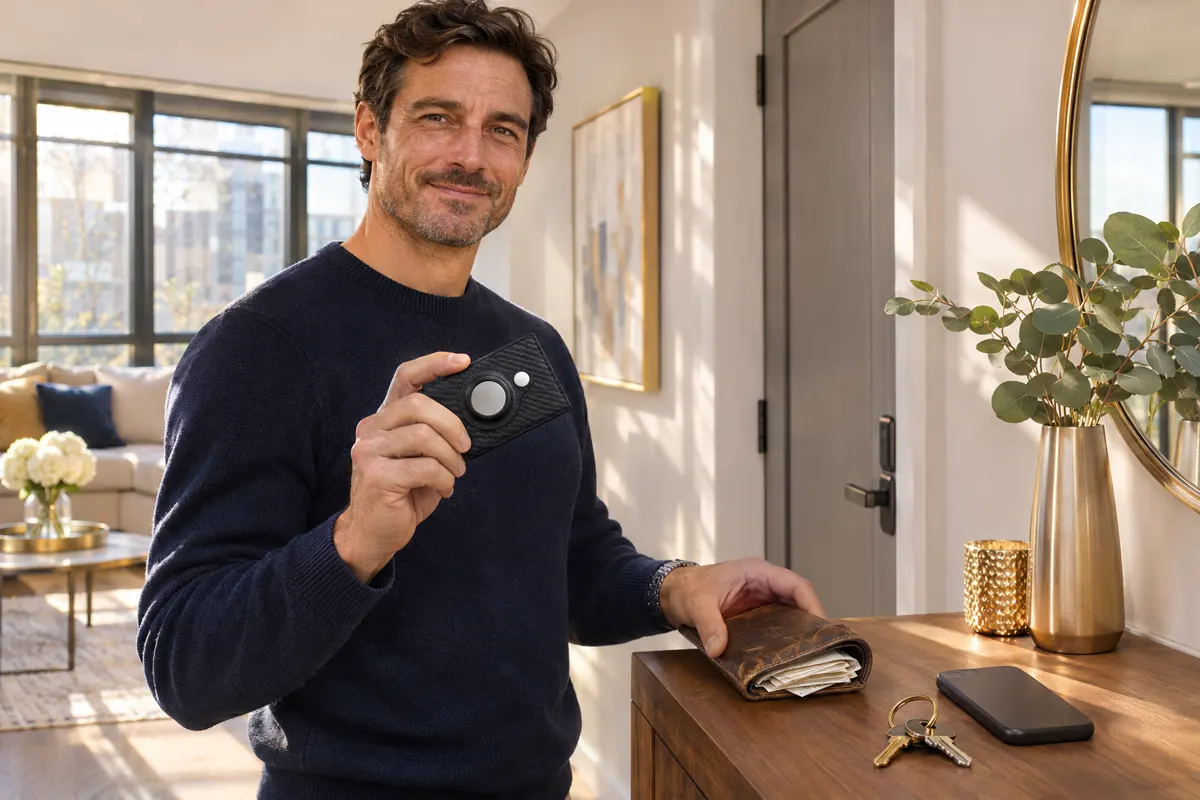
Searches for “RFID wallet for men” and “what is an RFID wallet” have been climbing in the US over the last few months, and it makes sense. The end of the year is when a lot of men look at the brick in their back pocket and decide it’s time for something better. The good news: you don’t need a complete lifestyle overhaul. A handful of simple “instead of this, do that” swaps gets you most of the way there.
Below are eight swaps we like, starting with the wallet itself. Each one is small, cheap or free, and easy to keep. At the end you’ll find a one-glance swap table and the wallet we recommend to make the whole thing stick.
Why small swaps work better than big resolutions
“I’m going to get organized next year” is vague, and vague goals fade fast. A swap is different: you replace one specific thing with another specific thing, once, and the better option keeps working for you every day without extra willpower. Change the wallet and the way you carry cards, cash and keys changes with it. That’s why the wallet is swap number one.
The 8 smart swaps
1. Instead of a bulky back-pocket bifold, carry a slim RFID wallet in the front pocket
The classic leather bifold tends to grow over the years: more cards, more receipts, more “just in case.” In the back pocket it’s uncomfortable to sit on, easy for a pickpocket to reach and easy to leave on a car seat without noticing. A slim card wallet in the front pocket fixes all three at once. If you’re unsure about the move, our guide to front pocket vs back pocket wallets explains how to switch without feeling lost for the first week.
2. Instead of loose contactless cards, keep them behind RFID shielding
Your tap-to-pay cards use short-range radio. An RFID-blocking wallet surrounds them with a conductive layer, so they can’t be read while the wallet is closed, and they still tap normally the moment you take one out. It’s not something to panic about, but it’s protection that costs you nothing in daily use. We break down the real risk in do RFID-blocking wallets actually work?
3. Instead of patting your pockets every morning, let your phone find your wallet
The most expensive wallet problem isn’t skimming, it’s losing the wallet: on a restaurant table, in a rideshare, between couch cushions. An Apple AirTag in a wallet that has a proper slot for it shows up in Find My on your iPhone, and with Notify When Left Behind turned on, your phone warns you when you walk away from it. That’s why we recommend the SafeTrack Wallet: the AirTag sits flush in a built-in holder instead of bulging inside a card slot.
4. Instead of digging through cards at the register, use pop-up access
Fishing the right card out of a tight leather slot while a line forms behind you is a small, daily annoyance. A wallet with a pop-up mechanism fans your cards out with one push. Put the card you use most in the front position and you’ll rarely think about it again.
5. Instead of a receipt archive in your wallet, go digital
Receipts are the number-one reason wallets bulge. Ask for e-receipts when you can, snap a photo of the ones you need for returns or expenses, and throw the paper away on the same day. If you want a full clear-out, our checklist of what to keep in your wallet (and what to leave at home) walks you through it card by card.
6. Instead of ten loyalty cards, use your phone’s wallet app
Most store, gym and coffee-shop cards can live in Apple Wallet or the store’s own app. Keep the physical ones you truly need (ID, payment cards, health insurance) and move the rest to your phone. Your new wallet stays slim, and you stop carrying plastic you use twice a year.
7. Instead of a giant key ring, carry only your daily keys
The same logic that slims your wallet works for keys. Split them: house and car keys you use every day on one small ring, everything else (shed, mailbox, spare office key) on a labeled hook at home. Lighter pockets, less wear on your pants, and less noise every time you sit down.
8. Instead of “wherever I dropped it,” give your carry one landing spot
Pick one tray, bowl or shelf by the door and make it the only place your wallet, keys and phone go when you get home. It sounds almost too simple, but it’s the habit that makes mornings calm. Combined with a tracked wallet, you have a plan A (the landing spot) and a plan B (Find My) every single day.
The swap table at a glance
| Swap out | Swap in | Why it helps |
|---|---|---|
| Bulky back-pocket bifold | Slim RFID wallet, front pocket | More comfortable, harder to pickpocket, harder to lose |
| Loose contactless cards | RFID-blocking shell | Cards can’t be read while the wallet is closed |
| Patting pockets every morning | AirTag slot + Find My alerts | See where the wallet is and get warned when you leave it |
| Digging for cards at the register | Pop-up card access | Your most-used card is one push away |
| Paper receipts | E-receipts and photos | Removes the main cause of wallet bulge |
| A stack of loyalty cards | Phone wallet app | Fewer cards, same rewards |
| Giant key ring | Daily keys only | Lighter, quieter pockets |
| “Wherever I dropped it” | One landing spot by the door | Calm mornings, nothing to search for |
How to make the swaps stick (start in December)
You don’t need to wait for January 1. Doing the swaps in December means the new carry is already a habit by the time everyone else is starting their resolutions. A simple order that works:
- Week 1: empty your old wallet on the table, move loyalty cards to your phone and throw away old receipts.
- Week 2: load your new RFID wallet with the essentials, add the AirTag and turn on Find My alerts. Our day-one setup guide shows exactly how.
- Week 3: split your keys and set up the landing spot by the door.
- Every Sunday after that: a two-minute check, clearing receipts and putting back anything that drifted in.
Keep the goal small and concrete (“my wallet goes in the front pocket and comes home to the tray”) rather than “be more organized.” Small, specific habits are the ones that last past February.
Our recommendation: the SafeTrack Wallet
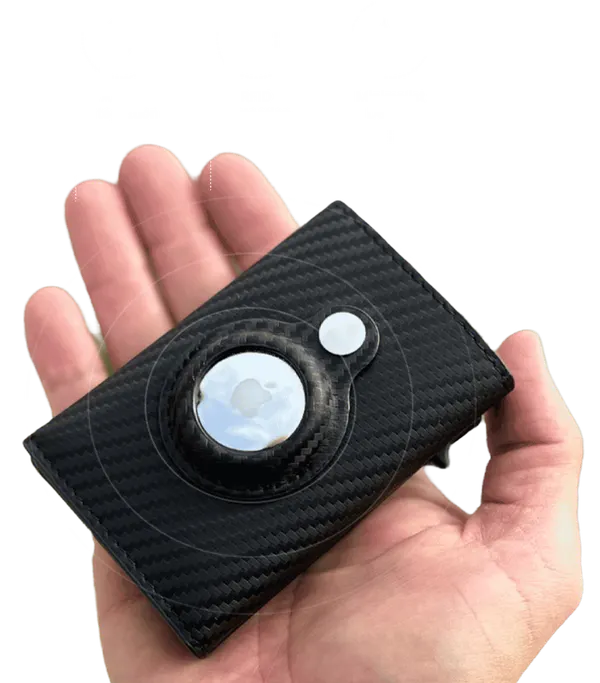
If you make only one of these swaps, make it the wallet, and make it the SafeTrack Wallet. It’s the RFID wallet for men we recommend because it covers swaps 1 to 4 in a single product: it’s slim enough for the front pocket, shields your cards, fans them out with one push and gives an AirTag a secure home so your wallet is always findable.
- RFID-blocking carbon fiber body that keeps contactless cards shielded while the wallet is closed.
- Built-in AirTag slot on the outside, so the tag sits flush and the wallet shows up in Find My on your iPhone (AirTag sold separately).
- Pop-up card access for the card you use most, and room for 1–14 cards plus up to 20 folded bills.
- Slim, light profile that makes the switch to front-pocket carry feel natural.
- From $44.95 on the official site, with lower per-wallet prices in bundles and a 90-day guarantee.
Read our full SafeTrack Wallet review or see every bundle on the home page.
Frequently asked questions
Is an RFID wallet for men worth it?
For most men who carry contactless cards, yes. RFID blocking is a quiet extra layer of protection that never needs switching on, and the best RFID wallets are also slimmer and better organized than a traditional bifold. The real upgrade comes when the wallet also solves losing it, for example with a built-in AirTag slot.
Can an RFID wallet hold an AirTag?
Some can. The SafeTrack Wallet has a built-in slot that holds an Apple AirTag on the outside of the wallet, so the RFID shielding around the cards doesn’t get in the way of the tag. The AirTag itself is sold separately.
How many cards should a man carry in his wallet?
Only what you use in a normal week: ID, one or two payment cards, a health insurance card and maybe a transit or work badge. Loyalty cards can usually move to your phone, and backup cards can stay at home. The SafeTrack Wallet holds 1 to 14 cards, so it adapts whether you carry three or a dozen.
Is a front-pocket wallet better than a back-pocket wallet?
For most men a slim front-pocket wallet is more comfortable to sit with, harder for pickpockets to reach and easier to notice if it slips out. A bulky back-pocket wallet is the most common thing men swap when they upgrade.
When is the best time to switch wallets?
Any time your current wallet is worn out, bulging or often misplaced. Many people like to switch in December so the new everyday carry is already a habit when the new year starts, instead of waiting for January 1.