The short answer
Carry only what you use in a normal week: your driver's license or ID, one main credit card and one debit card, your health insurance card, a small amount of cash and an emergency contact card. Leave at home anything that would help a thief steal your identity or get into your house — your Social Security card, passport, spare keys, written PINs — plus the clutter: unused store cards, gift cards and receipts. Then keep it lean with a wallet that physically can't turn into a brick. Our pick is the SafeTrack Wallet: slim carbon fiber, RFID blocking, pop-up cards and a built-in AirTag slot.
Open the average wallet and you'll find a small archive: three expired gift cards, a punch card from a coffee shop that closed, receipts from last spring, a backup card you haven't used since 2023 and, too often, something that really shouldn't be there at all. It feels harmless until the day the wallet goes missing. Then every extra item turns into a phone call, a replacement fee or a risk. This guide gives you a simple rule for deciding what stays, a clear list of what to leave at home, and a 15-minute routine to clean out your wallet and keep it that way.
The rule: carry what you use weekly, protect what you can't replace
Personal finance writers have offered versions of the same idea for years: sort everything into always, sometimes and never. Always-items earn a permanent slot because you use them most weeks. Sometimes-items go in only on the day you need them. Never-items stay at home, full stop, because losing them would cost far more than the minor convenience of carrying them.
Ask two questions about every card and paper in your wallet:
- Have I used this in the last month?If not, it is a sometimes-item at best. It can live in a drawer at home.
- What happens if a stranger has it tomorrow?If the honest answer is "they could open accounts in my name" or "they could walk into my house," it is a never-item.
What to keep in your wallet: the everyday essentials
- Driver's license or state ID. Keep it current, with your up-to-date address and photo.
- One main credit card. Credit cards carry stronger fraud protections than debit cards for everyday spending, which makes them the better card to tap and swipe.
- One debit card. For ATM cash and the occasional place that prefers it. Two payment cards are enough for almost every week.
- Health insurance card. The one card you'll want if something happens away from home. Add your auto insurance card if you drive.
- A small amount of cash. Enough for a tip, a parking meter or a card reader that's down — not your savings.
- An emergency contact card. A plain card with a name and phone number of someone to call, and a note like "If found, please call." Don't write your home address on it.
- Transit card or work badge if you use them every day.
That's it. For most people this list is somewhere between six and ten items — and that number matters, because it is exactly what a slim wallet is built to hold.
What to leave at home: 8 things that don't belong in your wallet
| Leave at home | Why |
|---|---|
| Social Security card | You rarely need the physical card day to day, and the number is the key to identity theft. Store it with your important papers. |
| Passport and birth certificate | Carry the passport only when you travel internationally. Both are valuable identity documents and a hassle to replace. |
| Spare house key | A key next to an ID with your address is an open invitation. Give a spare to a trusted neighbor or family member instead. |
| PINs, passwords, alarm codes | A note with your PIN turns a lost card into an empty account. Use a password manager. |
| Checkbook or blank checks | They show your account and routing numbers. Bring one only on the day you need it. |
| Every credit card you own | Each extra card is one more call to make if the wallet is lost. Keep the backups at home. |
| Gift cards | If the wallet is lost, the balance usually goes with it. Bring a gift card only when you're heading to that store. |
| Receipts, punch cards, old business cards | Pure bulk. Most loyalty programs work from your phone number or an app now. |
The 15-minute wallet clean-out routine
You don't need a weekend project. Put a timer on, empty the wallet onto a table and follow these steps. Repeat the routine at the start of each season, and the clutter never gets a chance to build up again.
- Empty everything out (1 minute).Every card, every bill, every scrap of paper. Look at the pile, not at the wallet.
- Make three piles (4 minutes).Always (used weekly), sometimes (used occasionally), never (identity documents, codes, spare keys). Be strict.
- Shred and toss (2 minutes).Receipts you don't need, expired cards, dead punch cards. Cut or shred anything with a number on it.
- Make a backup of what you carry (3 minutes).Photograph or photocopy the front and back of each card that stays, and store the copies safely at home or in an encrypted note. If the wallet disappears, you'll have every number and every bank phone line in one place.
- Set up a "sometimes" spot at home (2 minutes).An envelope or small box in a drawer for backup cards, gift cards and the checkbook. Things you can grab on the day you need them.
- Reload the essentials (2 minutes).Most-used card in the front slot, ID where you can reach it, cash folded behind. If it doesn't fit comfortably, something on the always-pile is really a sometimes-item.
- Make it findable (1 minute).Add your emergency contact card and, ideally, a tracker, so a lost wallet becomes a short detour instead of a crisis.
If this is the first clean-out in years, you'll probably remove half of what you were carrying. That's normal — and it is the moment most people realize their wallet is the problem, not their habits. We cover the comfort and pickpocket side of a lighter wallet in front pocket vs back pocket wallet. Ready to make the change stick? Follow our 30-day plan to switch to a minimalist wallet.
The common mistake: cleaning out a wallet that refills itself
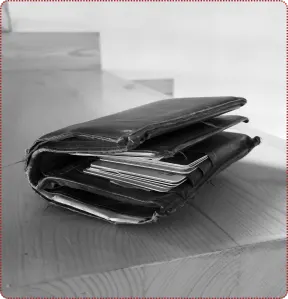
Here's what usually happens. You do a great clean-out, and six weeks later the wallet is fat again. A leather bifold has room for everything, and stretchy pockets quietly accept another receipt, another card, another folded note. The fix isn't more willpower; it's a wallet with a hard limit. A rigid, card-sized wallet holds your essentials and nothing more, so the routine sticks without you thinking about it. That's the main reason we recommend the SafeTrack Wallet to anyone who has just done a clean-out: its carbon fiber shell keeps the same slim shape whether you load three cards or a dozen, so there's simply no room for the junk to come back. Shopping for a replacement? Use our 10-point wallet buying checklist before you buy.
Our recommendation: the SafeTrack Wallet
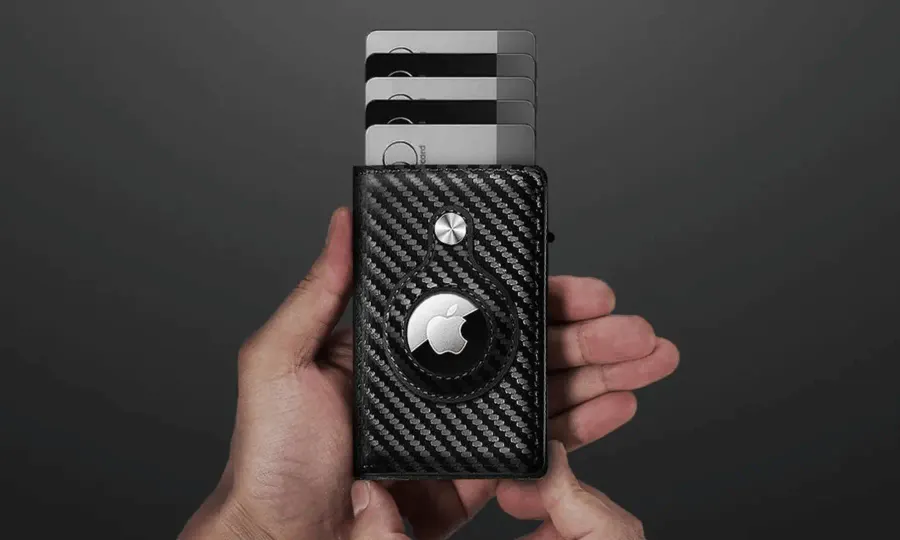
If you want your wallet to stay as lean as the day you cleaned it out, the SafeTrack Wallet is the wallet we recommend. It was made for exactly the everyday-essentials list above:
- Right-sized for essentials: the maker rates it for 1 to 14 cards or IDs plus up to 20 bills in the expandable back section — plenty for an ID, two payment cards, insurance cards and some cash, with no room for a receipt archive.
- Slim and rigid: 3.86 x 2.56 x 0.83 inches and about 1.7 oz in carbon fiber. It doesn't stretch, curve or bulge, so it stays front-pocket friendly.
- One-push card access: the slide lever fans your cards out in a stagger, so the card you need is right there.
- RFID blocking: your contactless cards and IDs are shielded while the wallet is closed.
- Built-in AirTag slot: drop in an Apple AirTag (sold separately) and the wallet shows up in Find My on your iPhone, with its location on a map, a sound you can play and left-behind alerts.
The pricing rewards bundles: 1 wallet is $44.95 (plus $4.95 shipping), 2 wallets are $79.90, and the most popular 3-wallet bundle is $105 ($35 each) with free shipping — a nice way to hand the clean-out routine to a partner or a parent. The 5-wallet bundle is $33 each, also with free shipping. Every order is covered by a 90-day money-back guarantee, which gives you a full season to live with a lean wallet and decide for yourself.
Two honest notes: it's sold through the official site, and the tracking feature uses Apple's Find My, so it is built for iPhone owners. The slim carbon fiber build, RFID blocking and pop-up cards work for everyone. All the details are in our full SafeTrack Wallet review.
Frequently asked questions
What should you always keep in your wallet?
Your driver's license or ID, one main credit card and one debit card, your health insurance card (plus auto insurance if you drive), a small amount of cash and an emergency contact card. Add a transit card or work badge only if you use it every day.
What should you never keep in your wallet?
Your Social Security card, passport and birth certificate (unless you need them that day), a spare house key, written PINs or passwords, blank checks and every credit card you own. These either help a thief steal your identity or make a lost wallet far harder to recover from.
How many cards should I carry in my wallet?
Most people need six to ten items in total: an ID, one or two payment cards, insurance cards and maybe a transit card or badge. Keep backup cards, store cards and gift cards at home and bring them only on the day you need them.
How often should I clean out my wallet?
Once a season is a good rhythm. The full routine takes about 15 minutes: empty it, sort into always, sometimes and never, shred what you don't need, photograph the cards you carry and reload only the essentials.
Should I keep a copy of my wallet contents?
Yes. Photograph or photocopy the front and back of every card you carry and keep the copies safely at home or in an encrypted note. If your wallet is lost, you'll have every number and the bank phone lines ready to cancel cards quickly.
Does the SafeTrack Wallet hold enough for everyday essentials?
Yes. The maker rates it for 1 to 14 cards or IDs plus up to 20 bills, which covers an ID, payment cards, insurance cards and cash. It also has RFID blocking, a pop-up card lever and a slot for an Apple AirTag (sold separately).
Want the full picture first? Read our SafeTrack Wallet review, see how it works on the homepage, or compare materials in carbon fiber vs leather wallet.