The short answer
Front pocket wins. You never sit on it, it's far harder for a pickpocket to reach, and it's the pocket you check by reflex. The only thing holding most people back is the wallet itself: a fat bifold feels awful in a front pocket. The fix is a slim, rigid wallet built for it. Our pick is the SafeTrack Wallet — a carbon fiber wallet under an inch thick with RFID blocking, a one-push card lever and a built-in Apple AirTag slot, so it's comfortable up front and findable if it ever goes missing.
Ask ten people where they keep their wallet and most will tap their back pocket. It's the habit we picked up as teenagers and never questioned. Yet almost everyone who has switched to the front pocket says the same thing: they'd never go back. This guide compares the two honestly — comfort, security, convenience — then walks through the mistakes people make when they switch and the wallet that makes the move effortless.
Back pocket vs front pocket: the real comparison
| Factor | Back pocket | Front pocket |
|---|---|---|
| Sitting comfort | You sit on it all day; a thick wallet tilts your hips | Never sat on |
| Pickpocket risk | Highest — out of sight, easy to lift in a crowd | Low — in your line of sight, against your leg |
| Falling out | Common in cars, cabs, cinema and stadium seats | Rare; the pocket opening faces up |
| Noticing it's gone | Often hours later | Usually within minutes |
| Wallet wear | Bends, curves and cracks from being sat on | Keeps its shape |
| Works with a thick bifold | Yes, uncomfortably | No — needs a slim wallet |
| Works with a slim wallet | Yes | Yes, ideal |
The pattern is clear: the back pocket has exactly one advantage, and it's that your current wallet already fits there. Every other line favors the front pocket. The move is really about choosing a wallet that belongs up front.
Why sitting on your wallet is a bad habit
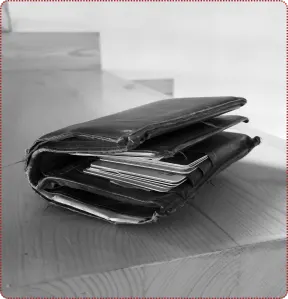
Picture a half-inch to inch-thick block under one side of your pelvis for eight hours of commuting, desk work and dinner. Your body compensates by tilting, and many people connect that lopsided posture with lower back, hip or leg discomfort at the end of the day. Comfort aside, a wallet that is sat on all day curls, cracks at the fold and bends the cards inside — a common reason contactless chips stop reading reliably.
We're not doctors, and ongoing back pain deserves a professional opinion. But moving the wallet is free, and it's one of the first things people try. The only reason it doesn't stick is that the wallet they move is too fat for the front pocket.
The security case for the front pocket
Pickpockets work where you can't see and won't feel: crowded trains, escalators, bar queues, festival crowds. The back pocket is their favorite target for a reason. A front pocket is different — your hand brushes it constantly, the opening faces up, and anyone reaching in has to stand directly in front of you. We covered how transit thieves operate in Stolen on the subway: how laptops, phones and backpacks vanish; the short version is that front-pocket carry removes you from the easiest category of victim.
There's a second layer most people forget: the wallet that is never stolen but simply left behind. On a café table, in a cab seat, at the gym. Position doesn't help there — only a tracker does. That's why we like a wallet with a built-in AirTag slot such as the SafeTrack Wallet: it combines front-pocket slimness with "Notify When Left Behind" alerts on your iPhone, so the one scenario your pocket can't solve is covered too.
5 mistakes people make when switching to the front pocket
- Moving the same fat wallet. A loaded bifold in a front pocket prints through your jeans, digs into your thigh when you sit and makes the pocket useless for anything else. Most people quit after a week — and blame the pocket instead of the wallet.
- Carrying every card you own. The average wallet holds cards that haven't been used in months. Pick your daily six to ten; store the rest at home. A slim wallet forces this edit, which is a feature, not a limitation.
- Choosing a soft card sleeve. Fabric and thin leather sleeves bend, let cards slide out and offer no protection. A rigid shell holds the stack flat and keeps the wallet the same shape all day.
- Sharing a pocket with keys. Keys scratch cards and gouge wallets. Phone in one front pocket, wallet in the other, keys on a clip or in a jacket pocket.
- Forgetting about the "left behind" problem. Switching pockets stops theft and sit-on damage; it doesn't stop you leaving the wallet on a counter. Pair the new habit with a tracker. Our guide to putting an AirTag in your wallet without the bulge compares the options.
What to look for in a front pocket wallet
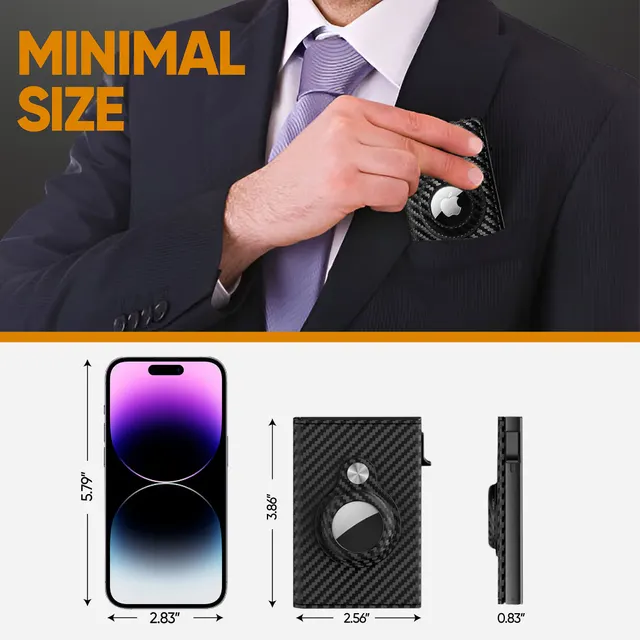
- Under an inch thick, roughly card-sized: it should disappear next to your phone.
- Rigid construction: aluminum or carbon fiber keeps the same profile with 3 cards or 12. If you're weighing materials, read carbon fiber vs leather wallet.
- Quick card access: a pop-up or slide mechanism matters more up front, because you're pulling the wallet out with one hand while standing.
- RFID blocking: a front pocket is close to strangers in a queue; shielding your contactless cards is an easy win.
- Room for a few bills: a strap or back section for cash so you don't need a second wallet.
- A place for a tracker: a proper AirTag slot, not a loose tag rattling around.
Moving your wallet into a coat for the cold months? See how to carry your wallet in a coat pocket this winter.
Our recommendation: the SafeTrack Wallet
If you want the front-pocket switch to stick, the SafeTrack Wallet is the wallet we recommend. It ticks every box on the list above and adds the one thing the others leave out: a way to find it.
- Made for the front pocket: 3.86 x 2.56 x 0.83 inches and about 1.7 oz. It sits flat beside your phone and you forget it's there.
- Rigid carbon fiber shell: the wallet stays the same slim shape whether it's carrying three cards or a dozen, and it won't curve or crack the way a sat-on bifold does.
- One-push card access: the slide lever fans your most-used cards out in a stagger, so paying one-handed at the register is faster than with any pocket wallet.
- RFID blocking, always on: your contactless cards and IDs are shielded while the wallet is closed — useful when you're shoulder to shoulder in a crowd.
- Built-in AirTag slot: drop in an Apple AirTag (sold separately) and the wallet appears in Find My on your iPhone with a map location, a sound you can play and left-behind alerts.
- Real-world capacity: the maker rates it for 1 to 14 cards or IDs plus up to 20 bills in the expandable back section.
Pricing is simple and improves in bundles: 1 wallet is $44.95 (plus $4.95 shipping), 2 wallets are $79.90, and the most popular 3-wallet bundle is $105 ($35 each) with free shipping — one for you and two for the people in your life who still sit on a brick. The 5-wallet bundle drops to $33 each, also with free shipping. Every order carries a 90-day money-back guarantee, which is plenty of time to make the front-pocket habit permanent and decide for yourself.
Two honest notes: it's sold only through the official site, and the tracking side relies on Apple's Find My, so that feature is built for iPhone users. The slim carbon fiber build, RFID protection and pop-up cards work for everyone. The full breakdown is in our complete SafeTrack Wallet review.
Before you switch pockets, slim down what you carry: our checklist of what to keep in your wallet (and what to leave at home) walks you through a 15-minute clean-out.
Frequently asked questions
Is it bad to keep your wallet in your back pocket?
It is a habit worth breaking. Sitting on a wallet for hours tilts your hips to one side, which many people link to lower back and hip discomfort, and a back pocket is the easiest spot for a pickpocket to reach. A back pocket is also where wallets most often slip out of in cars, taxis and theater seats. If you have ongoing back pain, talk to a doctor; moving the wallet is a simple first step.
Is a front pocket wallet more comfortable?
Yes, as long as the wallet is slim. A thin wallet in the front pocket is barely noticeable when you walk or sit, and you never sit on it. A thick bifold in the front pocket is uncomfortable, which is why most people who switch also downsize to a minimalist wallet.
What size wallet fits in a front pocket?
As a rule, anything around card-size and under an inch thick works well. The SafeTrack Wallet, for example, measures 3.86 x 2.56 x 0.83 inches and weighs about 1.7 oz, so it sits flat in a jeans or chino pocket next to your phone.
Are front pocket wallets safer from pickpockets?
Generally yes. A front pocket is in your line of sight and brushes against your hand or leg, so it is much harder to empty without you noticing. Adding an RFID-blocking shell protects your contactless cards too, and an AirTag slot means you can find the wallet if it does disappear.
Can I still carry cash in a front pocket wallet?
Yes. Most slim wallets hold a few folded bills behind the cards or under a strap. The SafeTrack Wallet is rated by its maker for 1 to 14 cards plus up to 20 bills in its expandable back section, which is more cash than most people carry.
Is the SafeTrack Wallet good for front-pocket carry?
It is designed for it: a slim, rigid carbon fiber shell that stays the same thickness no matter how many cards you load, RFID blocking, a slide lever that fans your cards out, and a built-in slot for an Apple AirTag (sold separately) so you can find the wallet from your iPhone.
Still deciding on materials? Read carbon fiber wallet vs leather wallet — or head back to the homepage to see how the SafeTrack Wallet works.