The short answer
A smart wallet is worth it if you lose your wallet now and then, carry it in your front pocket, use contactless cards, or own an iPhone and an AirTag. If you answer "yes" to three or more of the eight questions below, you will likely feel the difference on day one. If you carry a dozen loyalty cards and a thick stack of cash, a classic bifold may still suit you better. For most people who fit the profile, the SafeTrack Wallet is the one we recommend: slim carbon fiber, RFID blocking, one-push card access and a built-in AirTag slot.
"Smart wallet" sounds like marketing. Some products earn the name, others are a regular wallet with a buzzword on the box. So instead of telling you everyone needs one, we put together a quick self-test. Eight questions, two minutes, and you will know whether a slim tracker-ready wallet would genuinely make your days easier, or whether you can keep the wallet you have.
What counts as a smart wallet, anyway?
When people say smart wallet today, they usually mean a slim, rigid card wallet that adds three practical features to the basic job of holding cards and cash:
- RFID blocking that shields contactless cards while the wallet is closed. We explain what that really protects against in do RFID-blocking wallets actually work?
- Quick card access, often a lever or pull tab that fans your cards out.
- A tracker slot, typically sized for an Apple AirTag, so your wallet appears on a map in Find My and your phone can warn you when you leave it behind.
None of these is magic. Together, they solve the three most common wallet annoyances: bulk, fumbling for cards, and the sinking feeling of an empty pocket. Already bought one? Here is how to set up a SafeTrack Wallet on day one.
The 2-minute self-test
Count how many of these describe you:
- Have you lost or left your wallet somewhere in the past two years?A restaurant booth, a rideshare, the gym bench. If yes, the tracker slot alone may justify the switch.
- Do you own an iPhone?An AirTag in the wallet's slot works with Apple's Find My app, so iPhone owners get the most out of a tracker-ready wallet.
- Do you carry your wallet in your front pocket, or want to?Slim, rigid wallets are made for it. We cover the switch in front pocket vs back pocket.
- Do you mostly pay by card or phone, with only a little cash?Smart wallets are built around cards and a modest stack of bills.
- Do you carry contactless credit or debit cards?RFID blocking keeps them shielded while the wallet is closed, with no habit to remember.
- Does your current wallet bulge, fray or stretch?Carbon fiber and metal-frame wallets keep their shape for years.
- Do you fumble for the right card at the checkout?A pop-up mechanism puts your cards in a neat fan, one push away.
- Do you travel, commute or go out often?The more transitions in your day, the more chances to leave a wallet behind, and the more a tracker helps.
What your score means
| Your "yes" count | What it means | Our take |
|---|---|---|
| 0–2 | Your current wallet probably works fine | Keep it, maybe just clean it out |
| 3–5 | You would notice the benefits every day | A smart wallet is a sensible upgrade |
| 6–8 | You are exactly who these wallets are built for | Worth it; pick one with an AirTag slot |
Who benefits the most
- The "where's my wallet?" person. If you have ever retraced your steps in a panic, a wallet that shows its location and alerts you when left behind changes everything.
- iPhone users with an AirTag in a drawer. Plenty of AirTags end up unused because they do not fit a regular wallet. A dedicated slot finally gives one a home.
- Commuters and travelers. Trains, airports, rideshares and hotel lobbies are where wallets go missing.
- Minimalists. If you want to carry only what you use, a slim wallet nudges you there. Our what to keep in your wallet checklist helps with the clean-out.
Who can skip it (for now)
- Heavy cash users. If you regularly carry a thick stack of bills, a classic bifold may be more comfortable.
- People who never leave home without a bag. If your wallet lives inside a purse or backpack that already has a tracker, the extra benefit is smaller.
- Card collectors. If you need 20+ cards on you every day, no slim wallet will make you happy; it is better to trim the stack first.
What people try instead
- An AirTag loose in a bifold. It works, but the round tag creates a bump, slides around and presses on your cards.
- An AirTag on the keys only. Great for your keys, no help when the wallet is the thing you left on the table.
- Simply being more careful. Good habits matter, but they fail on exactly the busy days when wallets go missing.
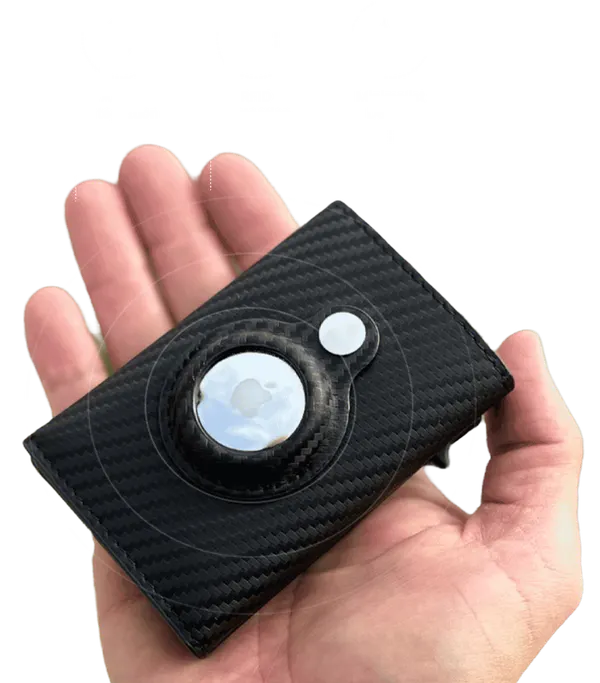
That is why, after comparing options, we keep coming back to a wallet that is designed around the tracker rather than a tracker squeezed into a wallet. It is the approach we cover in our SafeTrack Wallet review.
Our recommendation: the SafeTrack Wallet
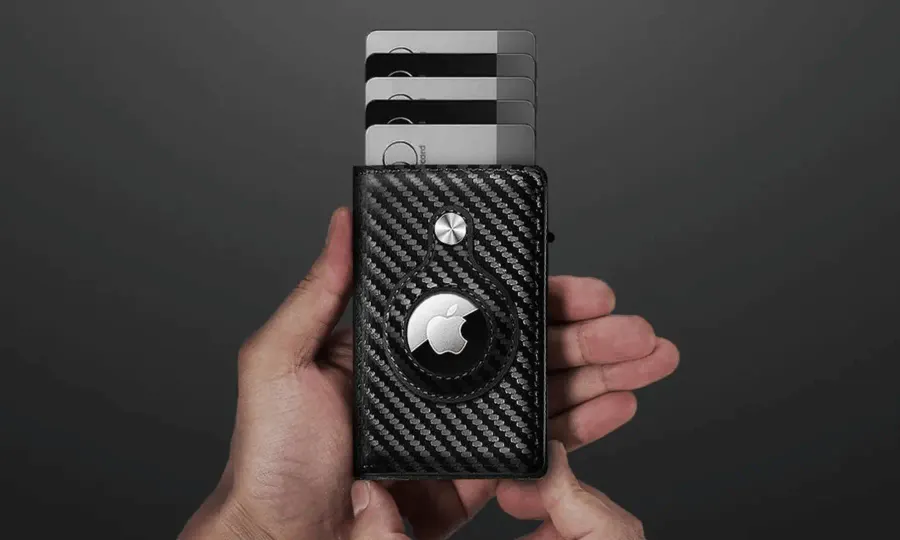
If you scored 3 or more, the SafeTrack Wallet is the smart wallet we recommend. It does exactly what makes a smart wallet worth it, without the gimmicks:
- Built-in AirTag slot: drop in an Apple AirTag (sold separately) and your wallet appears in Find My with its location, a sound you can play and left-behind alerts.
- RFID blocking: contactless cards and IDs are shielded while the wallet is closed.
- One-push card access: the slide lever fans your cards out so the one you need is right there.
- Slim and rigid: 3.86 x 2.56 x 0.83 inches and about 1.7 oz in carbon fiber, front-pocket friendly.
- Right-sized capacity: 1 to 14 cards or IDs plus up to 20 bills in the expandable back section.
Pricing rewards bundles: 1 wallet is $44.95 (plus $4.95 shipping), 2 wallets are $79.90, 3 wallets are $105 ($35 each, free shipping, the most popular choice), 4 wallets are $140 ($35 each, free shipping) and 5 wallets are $165 — $33 each with free shipping. Every order is covered by a 90-day money-back guarantee, so you can carry it for weeks and decide for yourself.
Frequently asked questions
What makes a wallet a "smart wallet"?
The term usually covers slim, rigid card wallets that add something a classic bifold does not: RFID blocking, quick card access such as a pop-up lever, and a built-in slot for a Bluetooth tracker like an Apple AirTag so the wallet can be located with your phone.
Can't I just put an AirTag in my regular wallet?
You can, but an AirTag is round and thicker than a card, so in a standard wallet it tends to bulge, shift around or press against your cards. A wallet with a dedicated AirTag slot holds it flat and secure, which is the main reason people switch.
Does the SafeTrack Wallet come with an AirTag?
No. The SafeTrack Wallet has a built-in AirTag slot, but the AirTag is sold separately. Once it is in the slot, the wallet shows up in Apple's Find My app on your iPhone.
Will a smart wallet hold all my cards?
It depends on how many you carry. The SafeTrack Wallet is rated for 1 to 14 cards or IDs plus up to 20 bills in the expandable back section, which covers most everyday carries once you leave the loyalty cards and old receipts at home.
How much does the SafeTrack Wallet cost?
On the official site, 1 wallet is $44.95 plus $4.95 shipping, 2 wallets are $79.90, 3 wallets are $105 with free shipping, 4 wallets are $140 and 5 wallets are $165, which works out to $33 each. Every order has a 90-day money-back guarantee.
Want the full picture first? Read our SafeTrack Wallet review, see how it works on the homepage, or learn how to put an AirTag in your wallet without the bulge.