Quick answer
DIY RFID protection can work: an unbroken layer of aluminum foil or a set of RFID blocking sleeves stops a contactless card from being read at close range. Where homemade fixes fall short is everyday life: foil creases and tears, sleeves add a step every time you pay, and neither helps you find a lost wallet. If you want protection that simply stays on, a ready-made RFID wallet is the easier choice, and one with an AirTag holder covers loss too.
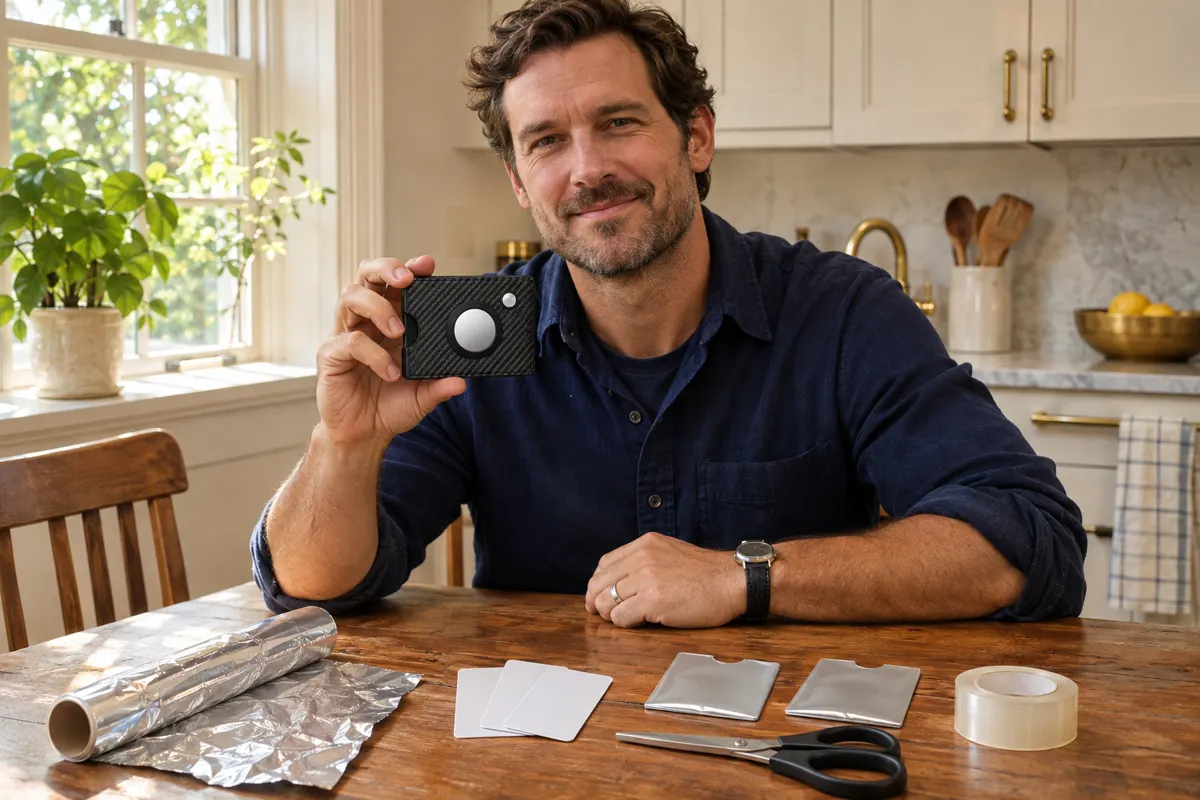
Searches for “RFID blocking sleeves” have been climbing in the US over the last three months, according to Google Trends, right alongside questions like “is RFID blocking necessary?” and “does RFID blocking work?”. It makes sense: almost every credit and debit card is contactless now, and people want to know whether they need to do anything about it, and whether a roll of kitchen foil can do the job for free.
We already covered the big picture in do RFID-blocking wallets actually work?. This guide is more hands-on: the homemade fixes people actually try, what each one really achieves, where it stops, and when buying a ready-made wallet is the smarter move.
Why DIY RFID blocking works at all
Contactless cards talk to readers over a very short-range radio signal. The card has no battery: it is powered by the reader's field when the two are a few centimeters apart. Put a continuous layer of conductive metal around the card and the field can't reach the chip, so the card stays silent. That is the whole principle behind every RFID product, from a $3 sleeve to a carbon fiber wallet.
The key word is continuous. Shielding only works when it wraps the card without gaps. A torn corner, a crease that splits, or one open side can be enough for a reader to wake the chip again. That is the detail that separates the DIY fixes from each other.
The 5 homemade fixes people try (and what each one really does)
1. A sheet of aluminum foil around the card
What it does: a full wrap of kitchen foil blocks a contactless read surprisingly well, and it costs almost nothing. It is a great way to see the principle with your own eyes.
Where it stops: foil is fragile. It creases every time you open it, small tears appear within days, and you have to unwrap the card to pay. Most people give up after a week.
2. A foil-lined DIY wallet (duct tape, cardboard or fabric)
What it does: lining a homemade duct-tape or fabric wallet with foil protects every card in it at once, which is a real step up from wrapping cards one by one.
Where it stops: the foil liner breaks along the fold, usually first where the wallet bends most, and you can't see the damage from the outside. Bulk also creeps up fast, and tape wallets get sticky and frayed in a pocket.
3. RFID blocking sleeves
What it does: sleeves are the most popular “almost DIY” answer. They are usually a metal-foil layer covered in a tougher material, so they last much longer than kitchen foil and protect one card each. They are perfect for a passport card or a card you rarely use.
Where it stops: you slide each card in and out of its sleeve every time you pay, sleeves wear at the opening, and six sleeved cards make a noticeably thicker wallet. Protection also depends on the sleeve's quality, so test each one.
4. An RFID blocker card
What it does: a credit-card-sized insert you slip between your cards, meant to protect the stack without sleeving each card.
Where it stops: results depend on the card, where it sits in the stack and how many cards you carry. It is one more card in your wallet, and it does nothing for the wallet itself if you lose it.
5. Stacking cards and “hoping for the best”
What it does: several contactless cards pressed together can confuse a reader, which is why your transit gate sometimes complains when you tap a whole wallet.
Where it stops: it is not designed protection, it is a side effect. It is unpredictable and offers no real reassurance.
DIY vs. ready-made at a glance
This is our editorial comparison, based on how each option behaves in daily use, not a lab test:
| Option | Covers all cards? | Daily effort | Durability | Helps find a lost wallet? |
|---|---|---|---|---|
| Foil wrap | One card at a time | Unwrap to pay | Days | No |
| Foil-lined DIY wallet | Yes, while the liner is intact | Low | Weeks, liner cracks at the fold | No |
| RFID blocking sleeves | One card per sleeve | Slide in and out to pay | Months | No |
| RFID blocker card | Depends on the stack | None | Long | No |
| Ready-made RFID wallet with AirTag holder | Yes, the whole card section | None | Long, rigid shell | Yes, with an AirTag (sold separately) |
How to test any RFID blocker at home
- Pick one contactless card and confirm it reads normally, using an NFC reader app on an Android phone or a contactless terminal you are allowed to test.
- Wrap, sleeve or pocket the card the way you'd actually carry it.
- Hold it against the reader from the front, the back and each edge. If it reads from any side, there is a gap.
- Repeat after a week of real use. This is the step that exposes foil and DIY liners: they often pass on day one and fail on day seven.
Where a ready-made RFID wallet pulls ahead
Every DIY fix asks something of you: unwrapping, sleeving, re-taping, re-testing. A ready-made RFID wallet moves the shielding into the wallet itself, so it is always on and you never think about it. A rigid shell also avoids the weak point of homemade liners, the fold that cracks. That is why our honest view is simple: DIY is a fine free experiment or travel stopgap, but for something you carry every day, a purpose-built wallet like the SafeTrack Wallet is the practical answer.
There's a bonus no sleeve can offer. For most people, the bigger everyday risk is not a hidden scanner, it's a wallet left in a cab, a restaurant booth or a coat pocket. A wallet with an AirTag holder covers both: shielded cards inside, a findable wallet outside. Our guide on how to put an AirTag in your wallet explains why the holder position matters.
Our recommendation: the SafeTrack Wallet
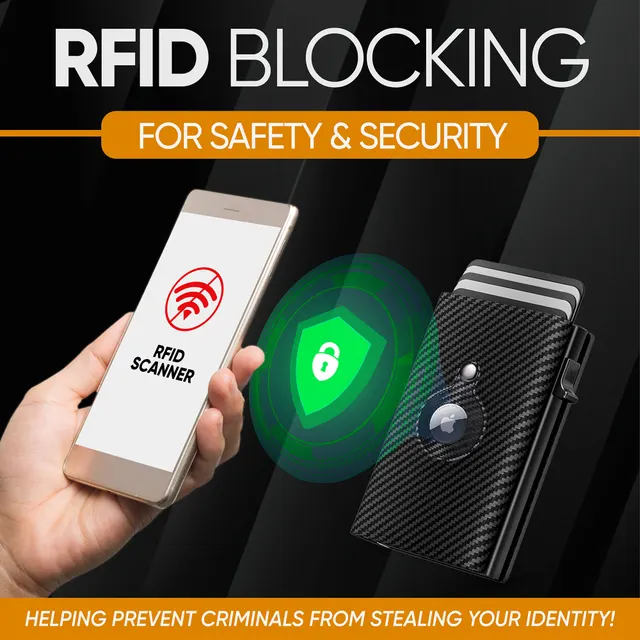
If you've tried foil or sleeves and want protection that just stays on, the SafeTrack Wallet is the wallet we recommend. It does in one slim carbon fiber shell what DIY fixes try to patch together: every card in the card section is shielded at once, nothing needs re-wrapping, and the built-in AirTag holder sits on the outside so your wallet stays findable in Find My.
- RFID-blocking carbon fiber body that shields contactless credit, debit and ID cards all day, with nothing to switch on or re-tape.
- Built-in AirTag holder on the outside of the shell (AirTag sold separately), so tracking works while the cards stay protected.
- Pop-up card access instead of sliding cards in and out of sleeves, with room for 1–14 cards plus up to 20 folded bills.
- Slim and light (about 1.7 oz), thinner than a stack of sleeved cards in a bifold.
- From $44.95 on the official site, $35 per wallet in the 3-pack with free shipping from three wallets, and a 90-day guarantee.
Read our full SafeTrack Wallet review or compare every bundle on the home page.
Frequently asked questions
Does aluminum foil really block RFID?
A full, unbroken wrap of aluminum foil can block a contactless card from being read, because metal shields the short-range radio signal. The problem is durability: foil creases and tears quickly, and even a small gap can let the card read again, so it works best as a short-term fix.
Are RFID blocking sleeves worth it?
Sleeves are a cheap, sturdier step up from foil and they work well for a card or two, such as a passport card or a spare credit card. The downside is daily friction: you slide every card in and out of its sleeve, and sleeves add thickness when you carry many cards.
Do RFID blocking cards protect the whole wallet?
A blocker card is designed to sit among your cards and disrupt scans, but how well it covers depends on the card, its position and how many cards you carry. Test it at home with a contactless reader or a phone before relying on it.
How can I test if my DIY RFID blocker works?
Wrap or sleeve a contactless card and hold it against a contactless reader you are allowed to test, or use an NFC reader app on an Android phone. If the card still reads from either side, the shielding has gaps.
Can I put an AirTag inside an RFID wallet?
Yes, if the AirTag sits outside the shielded card compartment. The SafeTrack Wallet has a built-in AirTag holder on the outside of its RFID-blocking shell, so the cards are shielded and the AirTag can still talk to Find My. The AirTag is sold separately.
Is a ready-made RFID wallet better than a DIY fix?
For everyday carry, usually yes. A ready-made RFID wallet shields every card at once, holds its shape and needs no maintenance, while foil wears out and sleeves add a step every time you pay. DIY fixes are fine as a free test or a travel stopgap.
Trend note: “RFID blocking sleeves” appears among rising US searches related to RFID blocking in Google Trends (last 3 months, November 2026). AirTag and Find My are trademarks of Apple Inc.; Tracker Pulse is not affiliated with Apple.