The short answer
Travel losses cluster at transitions — security trays, taxi seats, café tables, hotel checkouts — so that's where the habits below aim. The core moves: split your cards and cash across two places, copy your documents before you leave, do a three-item pat-down at every transition, treat the security tray and the seat-back pocket as danger zones, and tag what you can't afford to lose so your phone notices a left-behind bag before you're a terminal away.
Ask frequent travelers how they've avoided disaster for twenty years and you won't hear about luck — you'll hear the same short list of boring, effective habits. Here it is, ranked roughly by how much pain each one prevents per unit of effort.
Before you leave
- Split your money and cardsOne card and some cash in the wallet, a backup card and emergency cash in a separate bag pocket. A lost wallet then costs you an afternoon, not the trip. This single habit defuses the worst-case scenario more than any gadget.
- Copy your documentsPhotograph your passport, ID and cards (front and back for the numbers you'd need to cancel them). Store them in your phone and in cloud storage. Embassies replace passports far faster with a copy in hand.
- Slim down to a travel walletTake only what the trip needs: one primary card, one backup, ID, insurance card. Every card you leave home is one you cannot lose. Fewer items also makes the pat-down check faster and more reliable.
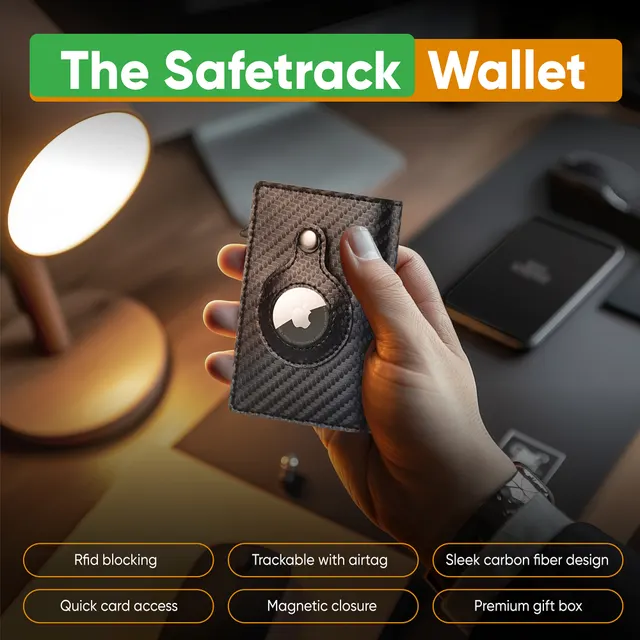
- Tag the critical itemsPut a tracker in the wallet, the passport holder and each checked bag. The point isn't paranoia — it's that your phone will alert you when you walk away from a tagged item, and show you a map when a bag goes somewhere you didn't. For the wallet, a smart wallet with a built-in AirTag slot keeps the tag secure and flat — and its RFID blocking shields your contactless cards in crowded terminals, too.
In the airport
- Treat the security tray as the #1 danger zoneMore valuables are lost at security than anywhere else in an airport: you're rushed, separated from your things, and re-dressing. Use your bag as the last item on the belt, put wallet/phone/watch inside the bag rather than loose in a tray, and do a full pat-down before walking away.
- Never use the seat-back pocket for valuablesIt's a black hole with a 100% out-of-sight rate. Passports, wallets and phones stay on your body or in the bag under the seat — the pocket gets the water bottle and nothing you'd miss.
- Make checked luggage identifiable and trackableAn ordinary black suitcase has a thousand twins on every carousel. A strap or ribbon prevents the honest-mistake swap; a tracker inside settles the "delayed or lost?" question with a map pin instead of a queue at the airline desk.
At the destination
- Do the three-item pat-down at every transitionPhone, wallet, passport — one deliberate touch-check every time you leave a taxi, a café table, a beach towel, a hotel room. Transitions are where attention drops and things stay behind; the ritual closes exactly that gap.
- Use the hotel safe — and beat the checkout blind spotThe safe protects against opportunistic theft all week, then causes its own classic loss: the passport still inside at checkout. Two fixes — keep the safe door open whenever it's empty, and if your passport holder carries a tracker, your phone will complain before the taxi reaches the airport.
The common thread
Notice that almost everything above attacks the same enemy: the transition moment, where your attention is on the next step and your valuables are one step behind. Habits shrink the number of unguarded moments; splitting and copies cap the damage; and a tracker is the one layer that stays alert when you can't — which is precisely when losses happen. None of it requires paranoia. It requires setting the system up once, before the trip.