The short answer
They solve different problems. A Bluetooth finder (AirTag-style tags, card trackers, smart wallets with a tracker slot) piggybacks on the phones around it: near-perfect coverage in cities, no subscription, months of battery, thin enough for a wallet. A cellular GPS tracker has its own SIM: true live tracking anywhere with cell signal — but $10–$25 a month forever, weekly charging, and a housing too thick for anything smaller than a glovebox. Rule of thumb: belongings → finder network; vehicles, pets and people → GPS.
"Tracker" is one word covering two technologies that could hardly be more different, and most buyer regret in this category comes from buying the wrong one. Here is the difference in plain language, with honest numbers.
How a Bluetooth finder network works
The tag itself only speaks Bluetooth — a radio with a range of a few dozen meters. The magic is what happens beyond that range: every compatible phone that passes near your tag hears its anonymous signal and quietly reports the position to the network. Your phone then shows you the tag's last reported location on a map.
In a city, "every compatible phone that passes" means constant updates — someone walks near your lost wallet every few minutes. The system is anonymous and encrypted; the passerby never knows their phone relayed anything, and only you can see the location.
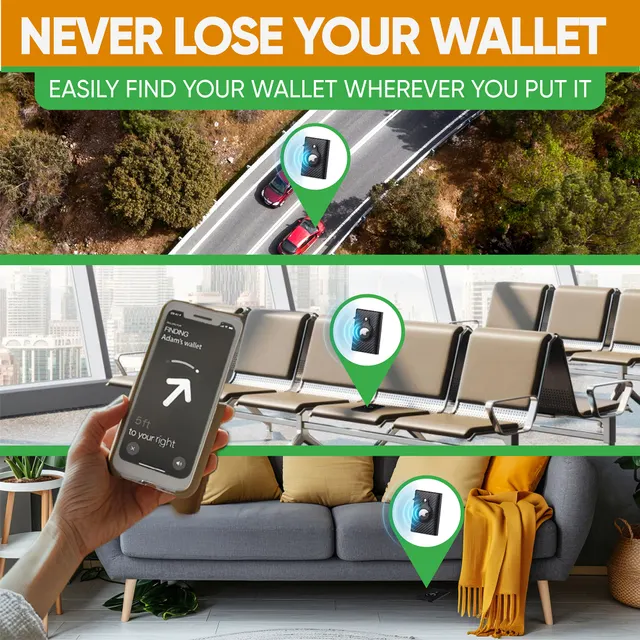
- Strengths: no subscription, battery measured in months, tiny form factors (including card-thin tags and smart wallets with a built-in AirTag slot), left-behind alerts, ring-to-find nearby.
- Weaknesses: updates depend on phone traffic — a wallet lost on a remote trail may sit silent until someone hikes past. There is no live "follow the dot" mode.
How a cellular GPS tracker works
A GPS unit is a tiny phone: it reads satellites for its own position and transmits it over the mobile network through its own SIM card. That means genuine live tracking — a moving dot you can follow in real time — anywhere with cell coverage, regardless of whether any phone is nearby.
- Strengths: live tracking of moving targets, geofence alerts, works in low-traffic areas, purpose-built for vehicles, pets and people.
- Weaknesses: a SIM plan of roughly $10–$25 every month, batteries that last days rather than months, and a housing far too thick for a wallet or document holder.
The three-year math
The purchase price hides the real difference. Run the numbers over three years of protecting, say, a wallet and a suitcase:
| Bluetooth finder card | Cellular GPS unit | |
|---|---|---|
| Hardware | ~$25–$45 per item, once | ~$30–$100 per unit |
| Subscription | $0 | $10–$25/month → $360–$900 over 3 years |
| Battery care | Recharge ~twice a year | Recharge every few days |
| Fits a wallet? | Yes — card tags and AirTag smart wallets exist | No |
For everyday belongings, the GPS route costs ten to twenty times more over its life — for live-tracking ability that a stationary lost wallet doesn't benefit from. For a car that might be driven away or a dog that might bolt, that live dot is exactly what you're paying for, and it's worth it.
An honest decision rule
- Wallet, passport, luggage, keys, laptop bag: finder network. These items get left somewhere and stay put; a network report within minutes is plenty, and $0/month matters across four or five protected items. For the wallet, choose a design with a proper home for the tag — a smart wallet with a built-in AirTag slot — because a loose round tag bulges and falls out.
- Car, motorcycle, camper: cellular GPS. Theft means movement, and following a moving dot is GPS territory. Budget the subscription as part of the insurance.
- Pets: GPS collar for the escape-artist dog (live chase), finder tag as a budget fallback for the indoor cat (neighborhood-level, no fees).
- Kids' backpacks: finder network — school routes are exactly the phone-dense environment where the network shines. For tracking the child rather than the bag, that's a smartwatch/GPS conversation, not a tag.
One caveat in both directions
Neither technology stops a determined, tech-aware thief — modern phones disclose unknown tags traveling with a person, by design, for anti-stalking reasons. What trackers reliably do is defeat the ordinary loss: the café table, the taxi seat, the airport tray, the honest-mistake luggage swap. That covers the overwhelming majority of losses — and it's the scenario where acting within minutes, with a map, changes the outcome.